Insulation Company in La Habra Heights, CA
Blown in insulation is the workhorse retrofit for La Habra Heights homes, especially the 1970s – 90s custom builds with vaulted ceilings and undersized attic cavities that lose conditioned air all summer. These hillside properties sit above the Orange County basin, so roof decks absorb serious heat gain, while Santa Ana winds push dry, dusty air through every gap in the building envelope. Harbor Line Insulation has served La Habra Heights since 2015, and we approach each job with the understanding that a semi-rural, acre-plus lot demands more than a standard flatland installation. Call (866) 435-9603 when you’re ready to talk specifics.
Why La Habra Heights Homes Are Different
The housing stock here wasn’t built on a production line. Most homes are custom or owner-built, many from the 1960s through the 1990s, sitting on large hillside lots with vaulted or cathedral ceilings, exposed beam construction, and attics that were either never vented or vented poorly. When we survey a home off Hacienda Road or West Road, we expect to find under-insulated ceiling cavities, thermal bypasses around recessed lights, and floor systems over slope-side crawl spaces that let cold air in during winter mornings. The climate compounds it: warmer summer days and cooler nights than the flatlands, occasional frost in winter, and Santa Ana events that pressurize the house and draw air through every seam. Insulation choices here also intersect with wildfire exposure. Brush-covered ridgelines mean many homes need insulation paired with Class A fire-rated assemblies and ember-resistant vent screens, a combination contractors from La Habra or Whittier rarely encounter.
Our Main La Habra Heights Services
The two services La Habra Heights homeowners call about most are attic insulation for heat-gain control and spray foam for air sealing on difficult hillside envelopes. Each has its own dedicated page with local pricing and specifics.
Attic Insulation in La Habra Heights
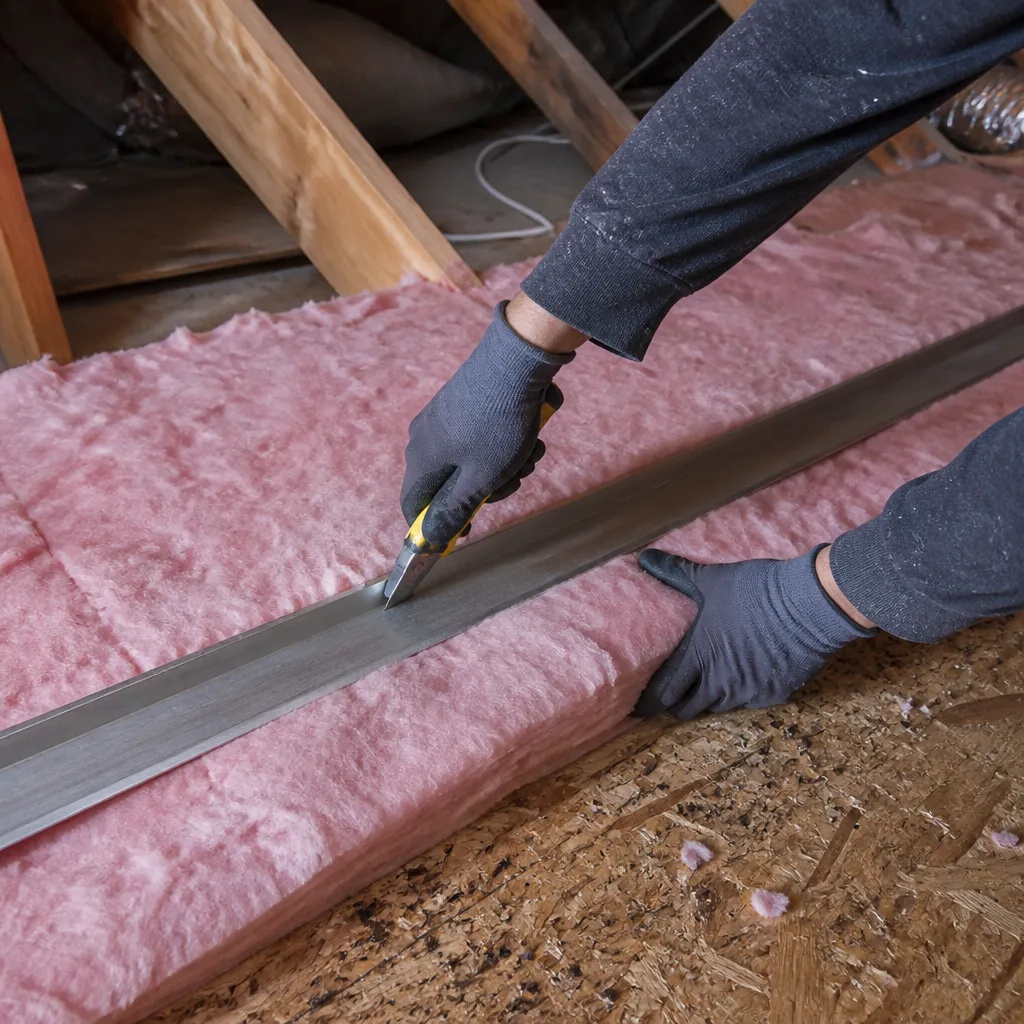
Attic work here often means retrofitting cathedral ceilings and exposed rafter assemblies rather than simply topping off a flat attic floor. We assess the existing venting, check for ember intrusion points, and recommend materials that fit the cavity depth and fire-safety needs of the structure. For homes with accessible attic floors, blown-in insulation is usually the fastest path to a cooler second story. For sealed or sloped cavities, batts or boards make more sense. The right material depends on what the roofline will actually allow. See Attic Insulation in La Habra Heights for full details on our approach and local pricing.
Spray Foam Insulation in La Habra Heights
Spray foam earns its cost on hillside homes where air leakage is the dominant problem. Cathedral ceilings with exposed beams, unvented roof assemblies, and slope-side crawl spaces all benefit from the air-sealing and thermal performance of closed- or open-cell foam. Because we install Icynene and Demilec systems, we can spec the correct foam density for each zone rather than forcing one product onto every surface. Many La Habra Heights clients combine spray foam in the roofline with blown-in insulation in flat attic areas. Read Spray Foam Insulation in La Habra Heights for a zone-by-zone breakdown of where foam actually pays off here.
What happens when you call
- 1
A real person answersNo phone trees — you reach a local pro.
- 2
You get an upfront price rangeHonest numbers before anyone is dispatched.
- 3
A background-checked tech heads outLicensed & insured, dispatched right away.
- 4
You approve before work beginsNothing starts until you say go.
Blown In Insulation in La Habra Heights
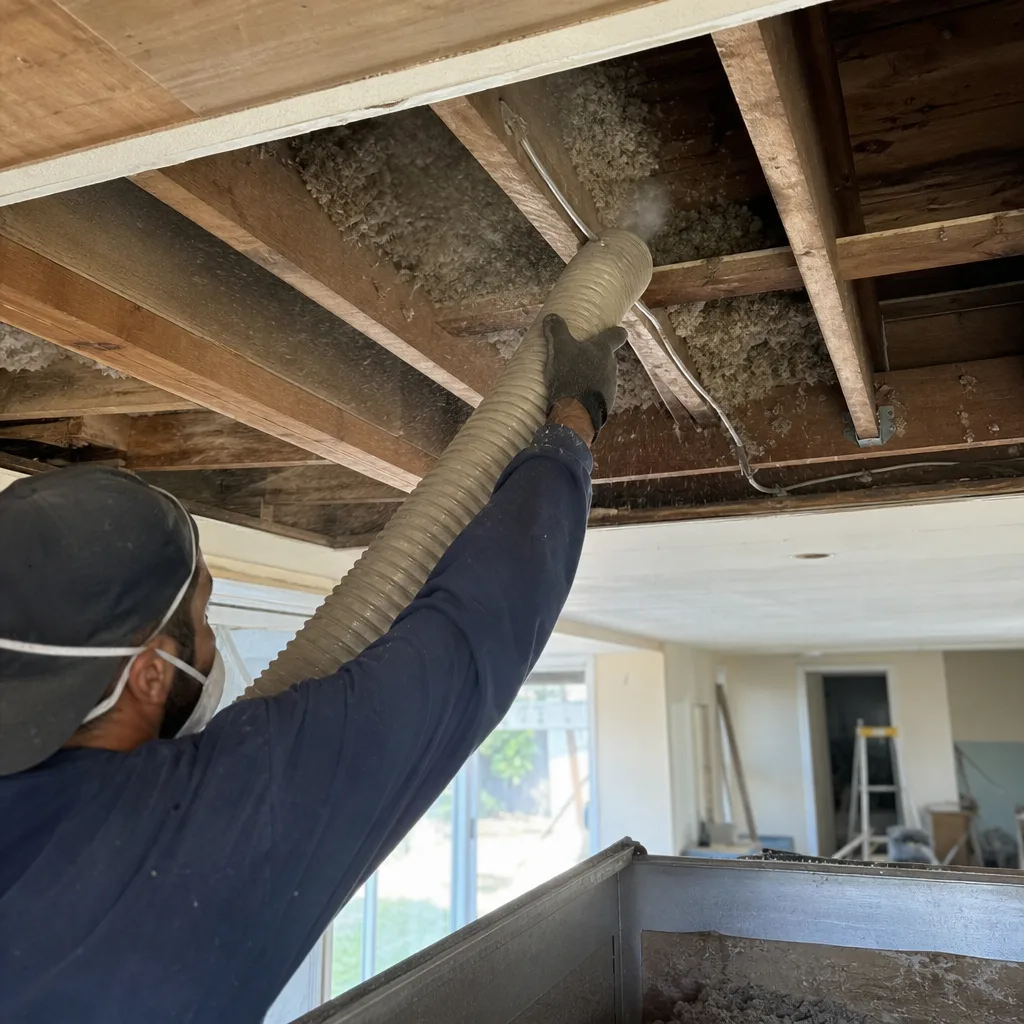
Blown in insulation is frequently the most practical upgrade for La Habra Heights attics, where existing fiberglass batts from the 1980s and 90s have compressed, shifted, or simply never reached the stated R-value. Loose fill settles into the irregular cavities of owner-built homes, fills the gaps around cross-bracing and recessed fixtures, and can be installed without disturbing the exposed beam ceilings that make these houses distinctive. For many properties in the 90633 ZIP code, it’s the fastest single-day fix for summer heat gain through the roof. Our crews handle the full scope under one roof, from material selection to final depth checks. If you want to understand how blown-in compares to other methods before you call, our Blown In Insulation hub page explains the material options and installation process in detail.
Cellulose Insulation
Signs you need it
Your attic insulation is thin, dusty, or has settled below the top of the ceiling joists, and your upstairs rooms run five to eight degrees warmer than the rest of the house in summer.
What it costs in La Habra Heights
Cellulose attic retrofits here typically run $2.20 to $4.00 per square foot installed, with hillside access and small attic hatches pushing most La Habra Heights jobs toward the middle of that range.
How we do it
We air-seal the top plates and penetrations, install baffles at the eaves, blow GreenFiber cellulose to the specified depth, and verify coverage with a depth gauge before we leave.
Blown In Attic Insulation
Signs you need it
Your attic has bare patches, old batts that don’t fill the joist bays, or you can see the ceiling framing from the attic floor.
What it costs in La Habra Heights
Blown in attic insulation for a typical 1,800 to 2,500 square foot La Habra Heights home falls between $1,800 and $4,300 depending on existing depth, access, and whether we need to remove old material first.
How we do it
We inspect the existing insulation, remove or top it as the condition requires, seal penetrations, then blow fiberglass or cellulose to a uniform depth that meets the target R-value.
Blown In Cellulose Insulation
Signs you need it
You want a recycled-content option with better sound damping than fiberglass, and your existing attic insulation has settled enough to leave the perimeter of the ceiling uninsulated.
What it costs in La Habra Heights
Blown in cellulose runs $2.20 to $4.00 per square foot installed in La Habra Heights, with the higher end applying to dense-pack applications in enclosed cathedral cavities.
How we do it
We dense-pack or loose-fill GreenFiber cellulose depending on the cavity type, using a calibrated blower and verifying settled depth against the R-value spec.
Blown In Fiberglass Insulation
Signs you need it
Your attic needs a full-depth top-off and you prefer the lighter weight and moisture resistance of fiberglass over cellulose.
What it costs in La Habra Heights
Blown in fiberglass ranges from $1.90 to $3.60 per square foot installed, and it’s often the most cost-effective way to reach R-38 to R-60 in an open attic.
How we do it
We blow Owens Corning or Johns Manville loose-fill fiberglass with a high-output machine, checking depth at multiple points to ensure the R-value is consistent across the whole attic floor.
What Blown In Insulation Costs in La Habra Heights
| Item | Typical range in La Habra Heights |
|---|---|
| Blown in fiberglass (open attic) | $1.90 – $3.60 per sq ft |
| Blown in cellulose (loose fill) | $2.20 – $4.00 per sq ft |
| Full attic retrofit (1,800 – 2,500 sq ft home) | $1,800 – $4,300 |
Is blown in insulation worth it in La Habra Heights?
Yes, for most attics with accessible floors, blown in insulation delivers the quickest improvement in upstairs comfort because it fills irregular cavities and covers existing thin spots. Homes here with vaulted ceilings need a hybrid approach, but standard attics usually recover the cost within a few summers.
How long does blown in insulation last in La Habra Heights?
Cellulose and fiberglass settle over time, but a properly installed job should hold its R-value for 20 to 30 years. Santa Ana dust intrusion doesn’t degrade the material itself, though air leaks around the attic hatch or recessed lights can make it perform worse. Call (866) 435-9603 for an evaluation.
Brands We Service in La Habra Heights
We install and service blown in insulation from GreenFiber, Owens Corning, and Johns Manville, and we carry Demilec spray foam for sealed attic and roofline applications on hillside homes. Parts arrive from our Anaheim yard, so most La Habra Heights jobs don’t wait on special orders. See our brands for the full material list.
Pricing for Insulation Company in La Habra Heights, CA
| Service | Typical range in La Habra Heights |
|---|---|
| Blown in fiberglass (open attic) | $1.90 – $3.60 per sq ft |
| Blown in cellulose (loose fill) | $2.20 – $4.00 per sq ft |
| Blown in attic insulation (full retrofit) | $1,800 – $4,300 |
| Dense-pack cellulose (enclosed cathedral cavities) | $2.20 – $4.00 per sq ft |
| Air sealing + blown in insulation (combined) | $4.50 – $6.80 per sq ft |
| Attic insulation removal and re-blow | $2.50 – $4.50 per sq ft |
| Floor insulation (slope-side crawl spaces) | $1.50 – $3.00 per sq ft |
| Spray foam (closed-cell, roofline) | $2.75 – $5.00 per board ft |
| Spray foam (open-cell, attic floor) | $0.75 – $1.50 per board ft |
| Ember-resistant vent screen upgrade | $15 – $35 per vent |
| Whole-home insulation audit | $199 – $399 |
In La Habra Heights, the biggest price movers are attic access through small interior hatches, steep hillside staging, and the need to upgrade vent screens for wildfire ember resistance at the same time as the insulation work. We quote upfront and hold to the number; there’s no change order after we start.
Neighborhoods We Serve in La Habra Heights
We work throughout the 90633 ZIP code, from the ridgeline streets off Hacienda Road to the hillside lots around West Road and the canyon-adjacent properties further south. Most crews reach a La Habra Heights home within one business day from our Anaheim yard, and we schedule hillside jobs in a single visit whenever possible.
- Hacienda Road corridor
- West Road hillsides
- The Heights (central ridge)
- Canyon-adjacent lots near the eastern edge
- Slope-side properties off Fullerton Road
Service Area – Cities Near La Habra Heights
Harbor Line Insulation serves homes across the foothill communities around La Habra Heights. We also work throughout La Habra, CA, East La Mirada, CA, Fullerton, CA, and La Mirada, CA with the same material selection and installation approach. If you’re in a neighboring city with a similar hillside or older-home profile, call us for the same evaluation.
Serving La Habra Heights, CA — Our Local Coverage Area
We’re based in the La Habra Heights area and know this community well. Use the map below to see our service coverage — if you’re nearby, we can almost certainly help.
FAQs About Insulation Company in La Habra Heights
Most appointments in La Habra Heights can be scheduled within one to two business days. We stage from Anaheim, so hillside access off Hacienda Road or West Road doesn’t add a day to the schedule. Call (866) 435-9603 and we’ll confirm a window for the estimate.
In most cases, adding insulation to an existing attic or floor cavity doesn’t require a permit in La Habra Heights, but structural changes like adding venting through a roof deck might. We’ll tell you during the estimate if your project crosses that line, and we coordinate with the building department when needed.
Yes, that’s one of the most common conditions we work with in La Habra Heights. The options are dense-pack cellulose in the rafter bays, spray foam against the roof deck, or a combination depending on whether the assembly is vented or unvented. We’ll assess each ceiling section separately and recommend the approach that won’t trap moisture.
What happens when you call
- 1A real person answersNo phone trees — talk to a local insulation pro.
- 2You get an upfront price rangeHonest numbers before anyone is dispatched. No surprises.
- 3A background-checked tech heads outLicensed & insured, typically same-day.
- 4You approve before work beginsNothing starts until you say go.
What La Habra Heights Customers Say
"Installed baffles at the soffits so the new insulation didn't block the ventilation, which the previous contractor apparently never considered."
— Ryan Fletcher"He did a blower door test before and after and gave me the numbers. I like being able to see the difference rather than being told about it."
— Eric Nguyen"Attic was at maybe R-11 from the 1970s and blown in over the top would have just buried the problem. They removed the old material, air sealed the top plates and penetrations first, then blew in to R-49. The upstairs is a completely different house in August."
— Renee Doyle